Saddle Hunting for Bowhunters: Gear, Safety, and Shooting From a Saddle
Grafton Archery & Outdoors
Saddle hunting has moved from a niche setup to something plenty of bowhunters are trying for the first time. If you're wondering whether a saddle fits the way you hunt, this guide covers the gear you'll need, the safety habits that aren't optional, and what changes when you shoot your bow from one.
We've been setting up bowhunters for over three decades, and the same rule applies here as anywhere else: gear only works if you've practiced with it before the hunt.
What Is Saddle Hunting?
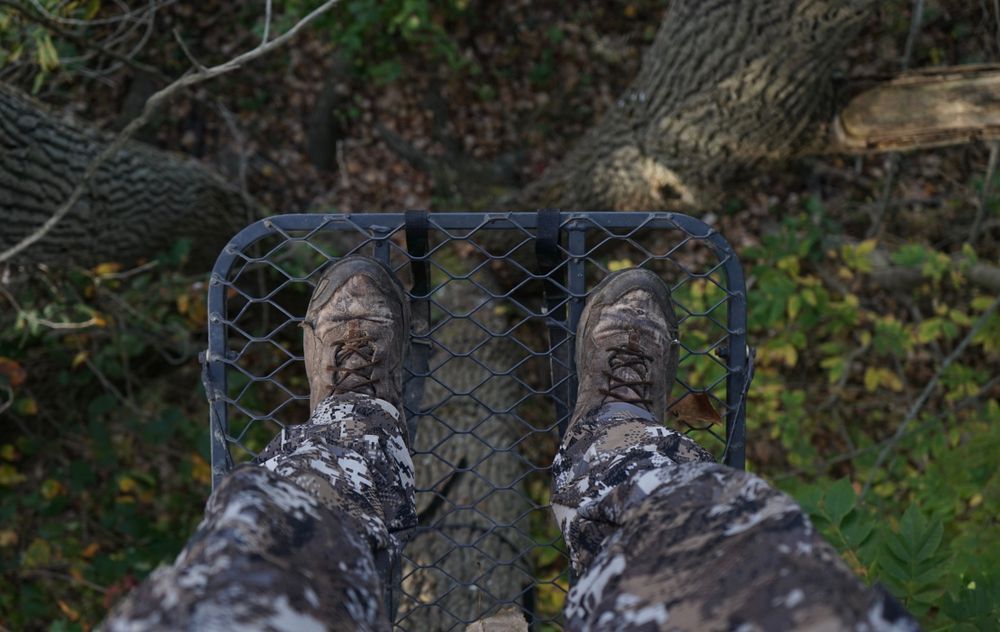
In a saddle, you don't stand on a stand or sit on a seat. You wear the saddle, a sling that wraps around your waist and legs, and connect it to the tree with a tether. Then you lean back into it with your feet on a small platform or step, facing the tree instead of facing away from it.
Bowhunters like saddles for a few practical reasons:
- They pack light. A saddle setup is easier to carry in than most hang-on stands, so moving with the deer becomes realistic.
- They work in more trees. Trunks with bends, knots, or awkward limbs that rule out a stand are often fine for a saddle.
- They keep you tight to the trunk. The tree breaks up your outline, and with practice you can shoot around both sides of it.
The honest tradeoff is a learning curve. The first few sits feel strange, and shooting positions take work. Comfort comes from adjusting your setup over several hunts, not straight out of the box.
The Core Saddle Hunting Gear
Most saddle setups come down to the same handful of pieces. Here's what each one does and what to pay attention to.
| Gear | What it does | What to look for |
|---|---|---|
| Saddle | The sling you wear and lean back into | Fit over your actual hunting layers, adjustability, comfort on a long sit |
| Tether and bridge | Connect your saddle to the tree at hunting height | Manufacturer ratings and inspection guidance; check before every hunt |
| Lineman's rope | Keeps you connected to the tree while you climb | Used from your first step off the ground, every time |
| Climbing sticks or steps | Get you up the tree | Weight, how they attach, how many you need to reach your height |
| Platform | A stable place for your feet at height | Size versus packability, and how it attaches to the tree |
| Full-body harness | Fall protection | Worn and connected from the ground up, with no exceptions |
If you're starting from nothing, a kit takes a lot of the guesswork out. The GRiT Workhorse Saddle Kit is a sensible starting point; check the product page for what's included so you know what else to add.
To get up the tree, we carry GRiT Climbing Sticks. The GRiT Platform gives you somewhere solid to stand once you're up. You can browse the rest of our saddle hunting gear online.
Saddle Hunting Safety: Stay Connected From the Ground Up
Climbing up, getting settled at the top, and climbing down are the moments that deserve the most attention. They're also the moments it's tempting to rush.
Wear a full-body harness and stay connected to the tree from the moment your feet leave the ground until they're back on it. That means a lineman's rope while you climb, and your tether set before you ever take the lineman's rope off.
- Read every instruction and warning that comes with your saddle, tether, sticks, and platform, and stay within their weight ratings.
- Inspect ropes, tethers, straps, and buckles before every hunt. Fraying, cuts, stiff spots, or sun damage mean replace it now, not next season.
- Practice the full process a few feet off the ground in daylight before you ever hunt at height.
- Never climb with your bow. Raise and lower it on a haul line with no arrow nocked and your broadheads covered in the quiver.
- Tell someone where you're hunting and when you'll be back, and keep your phone where you can reach it from the tree.
Shooting Your Bow From a Saddle
This is where most new saddle hunters find out what they need to practice. Facing the tree changes how you get into every shot.
Practice both sides of the tree
One side of the trunk will feel natural and the other won't. Spend more practice time on the awkward side, because that's where a buck will inevitably come from.
Keep your form when your feet move
Shift your feet around the platform to square up to the shot rather than twisting your upper body. For downhill shots, bend at the waist instead of dropping your bow arm, so your anchor and form stay the same as they are on flat ground.
Check your clearance at full draw
During your low-height practice, draw in every direction you expect to shoot. Make sure your cams, limbs, string, and arrow clear the trunk, your tether, and any nearby limbs, then let down under control.
Set up that practice with a proper target and backstop at realistic angles and distances. Our guide on how to practice archery effectively before hunting season covers building those sessions. If your groups suffer from odd positions, these common archery mistakes are a good place to start troubleshooting.
If awkward angles show your anchor wandering or the bow feeling long, that's a fit question. Bring it in rather than changing draw length yourself, because that's work for a technician.
Picking a Good Saddle Tree
- Choose healthy, live trees only. Skip anything with dead limbs or a dead top above you.
- Stay within the trunk sizes your tether and sticks are designed for, per the manufacturer.
- Position yourself so the trunk helps hide you from the direction you expect deer to come.
- Confirm clear shooting lanes on the sides you've practiced.
- Get permission, and check the rules for the property before attaching anything to a tree. Public and private land often have different requirements.
Get Your Saddle Setup Together
You can order saddle hunting gear from our online store and have it in hand in time to practice before your next sit. If you're close enough to stop by, bring your bow in and we'll look it over before you start shooting from new positions.
Questions about what to add to your setup? Reach out or call us at (704) 855-1300.
Shop Saddle Hunting Gear Call (704) 855-1300