Saddle Hunting for Beginners: Gear, Setup, and Staying Safe
Grafton Archery & Outdoors
More bowhunters are trading hang-on stands for saddles, and if you're thinking about making the switch, you probably have the same questions everyone does. What do you actually need, how does it work, and how do you stay safe up there? This guide to saddle hunting for beginners covers the gear, the practice, and the safety habits that never get skipped.
What Is Saddle Hunting?
A hunting saddle is a seat-style harness you wear around your waist and legs. Once you're up the tree, a rope tether connects the saddle's bridge to the trunk, and you lean back into it while standing on a small platform or steps. Instead of sitting on a stand facing out, you face the tree and hang beside it.
The appeal is mobility. A saddle setup is light, packs small, and lets you hunt trees that would never take a hang-on: crooked trunks, forked trees, and spots where a little cover behind you makes all the difference. You can also shoot around the tree in more directions than most stands allow.
The tradeoff is a learning curve. Shooting positions are different, getting comfortable takes some time, and every piece of the system has to be set up right. None of that is hard, but it does mean you practice before you hunt with it.
Saddle Hunting for Beginners: The Gear You Actually Need
You don't need a pile of accessories to start. You need a complete, compatible system and a safe way to get up and down the tree.
| Piece of gear | What it does | What to look for |
|---|---|---|
| Saddle | The seat you wear; holds you against the tree | A snug, comfortable fit over your hunting layers, and clear fall-protection information in the manual |
| Tether | Connects your saddle's bridge to the tree at hunting height | Rope in good condition with no fraying, cuts, or stiff glazed spots |
| Lineman's belt | Keeps you connected to the tree while you climb | Adjustable length so it fits the trees you actually hunt |
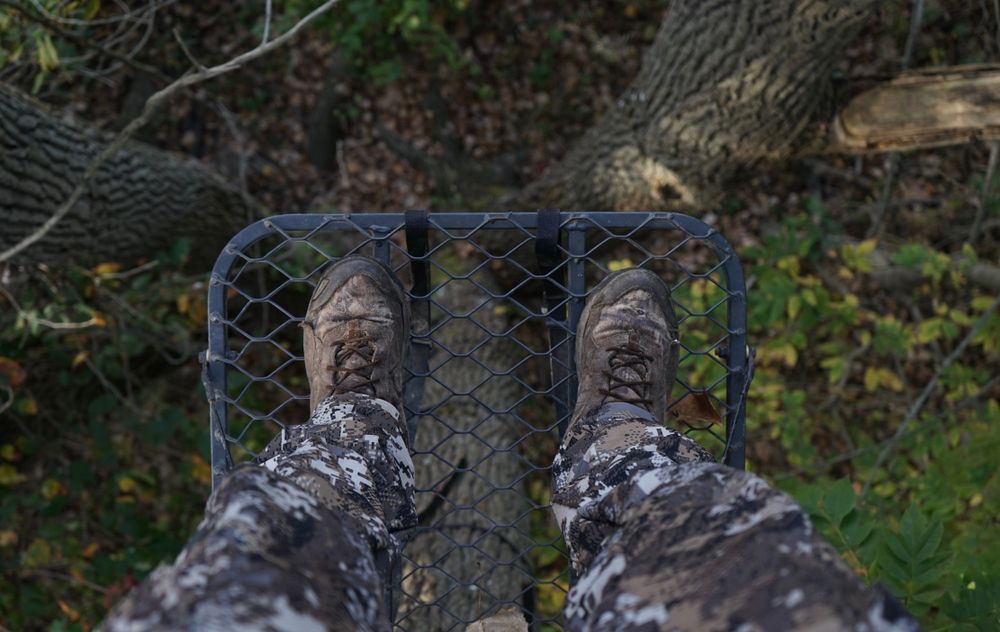
| Platform or steps | Gives your feet a place to stand | Stable footing you can set quietly in the dark |
| Climbing method | Gets you up and down the tree | Sticks that carry quietly and go on the tree without fumbling |
| Bow rope | Raises and lowers your bow and pack | Long enough for the height you hunt |
If you'd rather not piece a system together from scratch, a kit like the GRiT Workhorse Saddle Kit gives you a matched starting point. Check the listing for exactly what's included so you know what else you'll need.
For getting up the tree, a set of GRiT Climbing Sticks is a straightforward way to climb. For standing once you're up, a dedicated platform like the GRiT Platform or the Trophyline Onyx Platform gives you more room to shift your feet than a single step. For the rest of what goes in your pack, our list of accessories every bowhunter should carry covers the basics.
Saddle Safety: Stay Connected From the Ground Up
The rule is simple: you're attached to the tree from the moment your feet leave the ground until they're back on it. Falls tend to happen while climbing or getting in and out, not while you're settled in and watching a trail.
- Wear your lineman's belt around the tree for the entire climb, and keep it snug enough that it can't slide far if you slip.
- At hunting height, attach your tether before you take off the lineman's belt. You should never be unclipped from both, even for a second.
- Keep your tether high on the tree, at or above head height, so there's as little slack as possible.
- Inspect every rope, carabiner, and strap before each hunt. Fraying, cuts, or glazed spots mean it gets replaced before you climb.
- Carry a suspension relief strap and know how to use it.
- Tell someone where you're hunting and when you'll be back, and keep your phone where you can reach it from the tree.
Before you climb, confirm in the manufacturer's manual whether your saddle is certified as fall-arrest protection. If it isn't, wear a full-body harness attached from the ground up, the same as you would in any treestand.
Public land and leased properties can have their own rules about climbing trees, screw-in steps, and leaving gear up. Check with the landowner, and check the current North Carolina Wildlife Resources Commission regulations or your own state's wildlife agency before you go.
Practice on the Ground Before You Practice in the Woods
The best saddle hunters made their mistakes two feet off the ground in the backyard. Here's a good order to work through:
- Put the saddle on at home with the layers you'll hunt in, and adjust it until it's snug without pinching.
- Hang from a sturdy yard tree just a couple of feet up. Notice how tether height changes the way you sit.
- Practice your climb low. Set a stick, move the lineman's belt, step up, and come back down until it's smooth and quiet.
- Practice moving from the lineman's belt to the tether at low height until you can do it without thinking.
- Shoot from low height into a target with a proper backstop behind it, from both your strong side and your off side.
- Do one full dress rehearsal: pack up, walk in, climb, hang, and climb down, ideally in low light.
Shooting From a Saddle Takes Some Relearning
Shooting from a saddle feels different the first few times. Depending on where the deer shows up, you may be twisting at the waist, leaning out against the tether, or reaching around the trunk to your off side. Your form still has to hold together through all of it.
As you practice, check that:
- Your bow arm and string clear the tether and bridge in every position you plan to shoot from.
- Your anchor and head position stay the same when you twist.
- Your groups at realistic hunting distances match your groups on the ground. If one position doesn't hold up, keep working on it or plan not to take that shot.
If you want a structure for those sessions, our guide on practicing archery effectively before hunting season works just as well from a saddle as it does from flat ground.
Picking a Good Saddle Tree
Look for a live, fairly straight trunk with no dead limbs overhead. You want it wide enough to break up your outline but not so big your lineman's belt won't reach around. In Piedmont hardwoods, that often means a mature oak or poplar on the edge of thicker cover.
Since you'll be facing the tree, cover behind you matters more than cover in front. A tree with a few limbs or a neighboring trunk at your back hides your movement when you draw.
Ready to Try Saddle Hunting?
Start with a complete system, practice low until it's second nature, and never break the connection to the tree. You can order saddle hunting gear through our online store and start backyard practice this week.
We've been outfitting bowhunters from the same location in China Grove, NC, for over three decades. If you're local and want to see saddles, sticks, and platforms in person before you buy, stop by the shop or give us a call and we'll walk you through it.